
How to Tell If Your Attic Insulation Was Installed Correctly
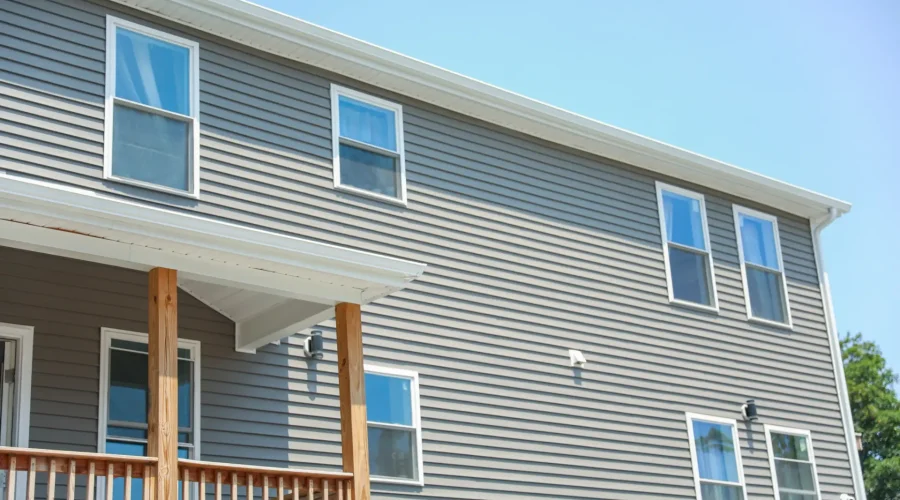
Your home’s siding does more than contribute to curb appeal — it’s a critical layer of protection against moisture, wind, pests, and the extreme seasonal temperatures that Illinois homeowners deal with year-round. When siding starts to fail, the consequences go far beyond cosmetics. Water infiltration, rising energy bills, and structural damage can all follow if the warning signs are ignored.
At Swiftguard Enterprises LLC, we inspect and replace siding for homeowners throughout Oak Lawn, IL and the surrounding Chicagoland area. Here are five clear signs that your siding has reached the end of its useful life — and why acting sooner rather than later protects your home and your wallet.
The most obvious sign that siding needs attention is visible physical damage. While a single cracked or loose panel can sometimes be repaired in isolation, widespread damage across multiple areas of your home’s exterior is a strong indicator that replacement is the more practical solution.
Walk the perimeter of your home at least once a year and look closely at the condition of every panel — not just the areas you can easily see from the driveway.
Siding that was once vibrant and uniform in color but now looks faded, blotchy, or discolored isn’t just an aesthetic issue — it’s a signal that the material’s protective properties may be breaking down.
Some surface issues can be addressed with a good pressure washing and fresh paint — but when discoloration is widespread and recurring, it typically points to a siding material that’s past its prime.
If your heating and cooling costs have been creeping up without a change in usage habits or utility rates, your siding may be part of the problem. Siding plays a direct role in your home’s thermal envelope — its ability to retain conditioned air inside and block outside temperatures from influencing indoor comfort.
An energy audit combined with a professional siding inspection can help identify exactly where your home is losing efficiency.
Water damage that originates at the siding often isn’t discovered until it’s already worked its way inside the wall. By the time you see staining on interior walls, smell mustiness in rooms along exterior walls, or notice soft spots when you press on siding panels, the damage behind the surface may already be significant.
Moisture damage discovered early — while still confined to the siding itself — is significantly less expensive to address than damage that has spread to the structural components behind it.
Even siding that looks acceptable from a distance has a finite lifespan. If your home’s siding is approaching or has passed its expected end of life, proactive replacement is almost always more cost-effective than continuing to patch and maintain aging material.
If you don’t know when your siding was last replaced, a professional inspection can help estimate its remaining lifespan based on material condition, wear patterns, and the home’s construction era.
Illinois weather is hard on every part of your home’s exterior. The combination of heavy snow and ice in winter, strong thunderstorms in spring and summer, and wide temperature swings throughout the year puts siding under constant stress. Siding that’s already compromised doesn’t just look bad — it leaves your home’s walls, insulation, and framing vulnerable to damage that compounds with every season.
Replacing siding at the right time — before it fails completely — protects your home’s structural integrity, maintains energy efficiency, and preserves curb appeal and resale value.
If you’ve noticed any of these warning signs on your home, a professional siding inspection is the right next step. At Swiftguard Enterprises LLC, we assess the full condition of your home’s exterior and provide honest recommendations — whether that’s a targeted repair or a full replacement — for homeowners throughout Oak Lawn, IL and up to 60 miles surrounding the area.
Don’t wait for a small siding problem to become a major repair. Contact Swiftguard Enterprises LLC today and take the guesswork out of planning for your next roof.

With 15 years of experience, we are committed to delivering high-quality workmanship, dependable service, and long-lasting results.
We don’t just build and repair — we protect what matters most.