

How to Tell If Your Attic Insulation Was Installed Correctly
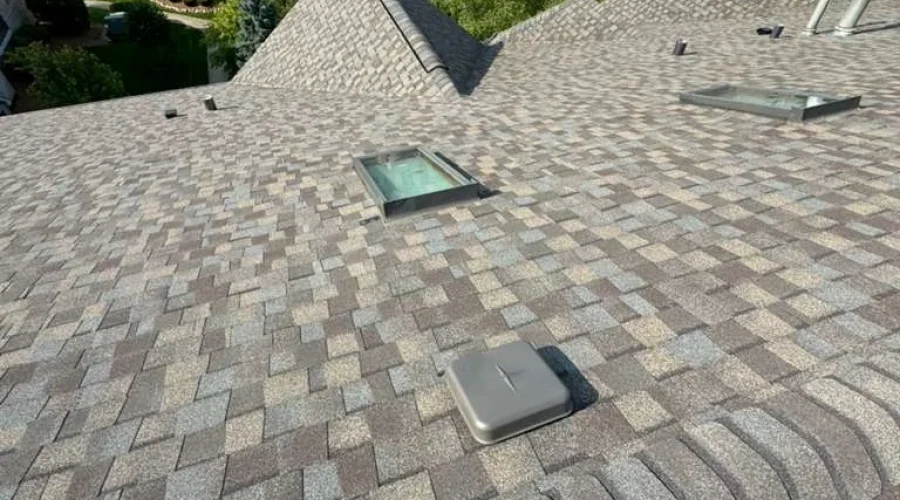
Most homeowners think about their roof in terms of what’s visible: the shingles, the gutters, the condition of the flashing around the chimney. Roof ventilation rarely comes up — until something goes wrong. But a poorly ventilated roof is one of the most common causes of premature shingle failure, ice dams, and attic moisture problems in Illinois homes, and it’s a factor that affects every roof regardless of age or material.
At Swiftguard Enterprises LLC, we inspect roof ventilation as part of every roofing assessment we perform for homeowners in Oak Lawn, IL and the surrounding Chicagoland area. Here’s what you need to understand about how roof ventilation works and why it matters so much in Illinois’s climate.
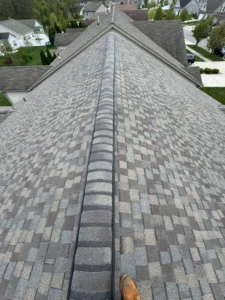
Roof ventilation creates a continuous flow of outside air through the attic space — cool air enters through vents at the lower edge of the roof (typically soffit vents), travels across the underside of the roof deck, and exits through vents near the peak (ridge vents or box vents). This airflow serves two critical functions depending on the season.
In summer, ventilation exhausts heat that builds up in the attic from solar gain. An unventilated attic can reach temperatures of 140–160°F on a hot Illinois day, which transfers heat into the living space below and causes the shingles above to cook from the underside — dramatically shortening their lifespan.
In winter, ventilation keeps the attic cold. A cold attic means the underside of the roof deck stays at roughly the same temperature as the outdoor air, which prevents the freeze-thaw cycle that creates ice dams along the eaves.
Illinois experiences both extremes — brutal summer heat and extended winters with repeated freeze-thaw cycling. That combination puts roofing systems under more stress than in more temperate climates, and ventilation failures show up quickly as a result.
A roof that’s slightly under-ventilated in a mild climate might perform adequately for years. In the Chicagoland area, the same roof is likely to show accelerated shingle aging in summer and ice dam problems in winter. The climate leaves very little margin for a ventilation system that’s merely adequate.
Insufficient intake ventilation Many older homes in Oak Lawn and the surrounding area have ridge vents or box vents at the top of the roof but inadequate soffit venting at the bottom. Without enough intake, exhaust vents can’t function properly — the airflow circuit is broken. The fix is usually adding or clearing soffit vents to balance the system.
Blocked soffit vents Soffit vents are frequently blocked by attic insulation that’s been pushed up against the eaves, by debris accumulation, or by insulation added during an energy upgrade without proper baffles to keep the vent channels clear. A blocked soffit vent effectively removes that section of the ventilation circuit.
Mixing exhaust vent types Ridge vents and box vents are both exhaust vents — they should not be installed on the same roof. When both types are present, air short-circuits between them rather than drawing from the soffit intake below, which eliminates the airflow benefit entirely. This is a common mistake on older homes that have had work done over the years.
Inadequate ventilation for attic square footage The standard ventilation requirement is 1 square foot of net free ventilation area for every 150 square feet of attic floor space, split evenly between intake and exhaust. Many homes, particularly those that have added insulation or finished attic space, don’t meet this ratio. An inspection can calculate whether your attic is adequately served.
Powered attic fans interfering with passive ventilation Whole-house or attic fans installed without proper attention to the ventilation system can actually work against passive ridge-and-soffit ventilation by pulling conditioned air from the living space rather than drawing outside air through the soffit vents.
You don’t always need to go into the attic to spot ventilation problems. Some of the most telling signs are visible from inside the home or on the roof surface:
A well-ventilated roof has a balanced system: continuous soffit venting along the eaves, clear pathways for air to travel across the underside of the roof deck (maintained with rafter baffles where insulation is present), and ridge or box vents at the peak to exhaust the air. The intake and exhaust areas are roughly equal. No one vent type is fighting against another.
When a roof replacement is performed, it’s the ideal time to assess and correct the ventilation system — adding soffit venting, installing a continuous ridge vent, and ensuring baffles are in place before new insulation goes down.
One of the most common missed opportunities during a roof replacement is failing to address ventilation at the same time. A brand-new set of architectural shingles installed over a poorly ventilated attic will age faster, be more vulnerable to ice dams, and may void the shingle manufacturer’s warranty — most major manufacturers explicitly require adequate ventilation as a condition of their material warranties.
At Swiftguard Enterprises LLC, every roof inspection includes an evaluation of the ventilation system. If your attic is under-ventilated or has a mixed exhaust configuration, we identify it before it becomes a bigger problem — and we address it as part of any roofing work we perform for homeowners throughout Oak Lawn, IL and up to 60 miles surrounding the area.
Concerned about your roof’s ventilation? Contact Swiftguard Enterprises LLC today to schedule a professional roof inspection and find out how your attic ventilation is performing.
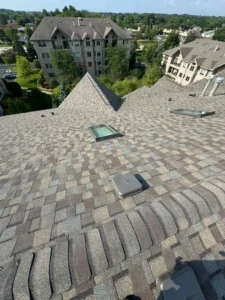

With 15 years of experience, we are committed to delivering high-quality workmanship, dependable service, and long-lasting results.
We don’t just build and repair — we protect what matters most.